
Case Study · Mixed-Use Multifamily
CapMatch Case Study: 300 East LaSalle
A Mixed-Use Multifamily Acquisition in South Bend, Indiana
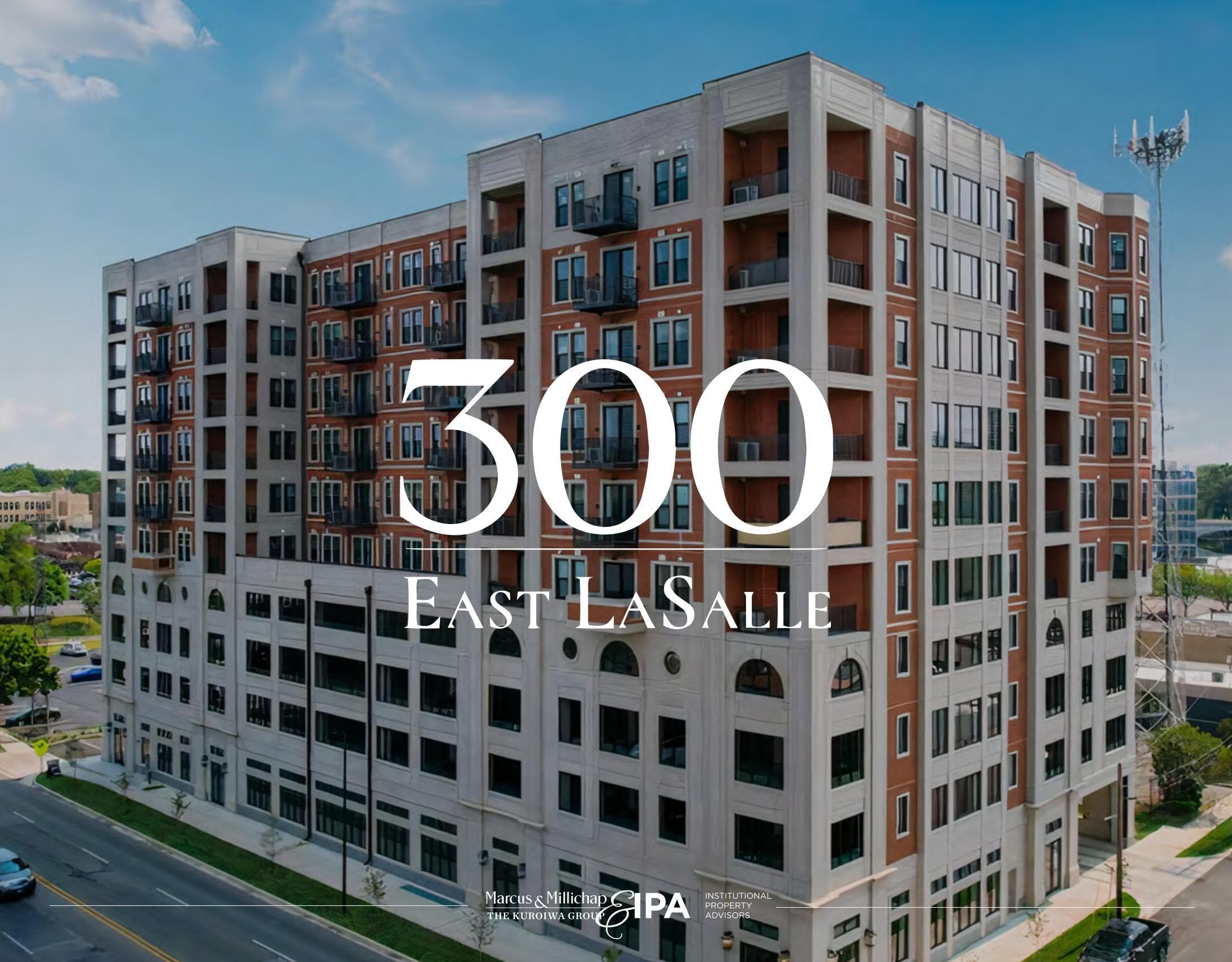
1. Deal Snapshot
- Asset Type: 144-unit Class A multifamily with 29,007 SF of ground-floor commercial space
- Capital Sought: Acquisition financing - $31.5 million senior debt facility
- Borrower Profile: Private equity-backed sponsor pursuing Midwest value-oriented multifamily with commercial income diversification
Why This Deal Was Complex: The 300 East LaSalle transaction presented several structural challenges that made traditional document-based underwriting especially fragmented. The property is a 2022-vintage mixed-use development in South Bend's East Bank neighborhood, combining 144 residential units with two long-term commercial tenants - East Race Market (NNN, 10-year term) and DMTM office space (gross lease, 8-year term). The deal also carried a multi-year property tax abatement, which materially affected valuation depending on whether lenders underwrote to abated NOI or applied a net present value adjustment. These layered income streams, lease structures, and tax assumptions created multiple "correct" answers depending on underwriting methodology - and no single static document could accommodate them all.
2. The Challenge: Static Documents, Version Chaos, and Lender Friction
When the borrower initiated the financing process, their advisor received an extensive document package that reflected the typical complexity of a stabilized mixed-use acquisition:
- A 20+ page broker price opinion from Marcus & Millichap / IPA containing historical financials, rent roll snapshots, ten-year cash flow projections, and market comparables
- Separate Excel models with trailing-12, trailing-8, trailing-3, and trailing-1 income statements - each showing slightly different expense treatments
- Two distinct valuation approaches: one blending residential and commercial cap rates (6.24% blended), another applying the $4.4 million NPV of the tax abatement to a lower gross value
- Rent comparables across six properties with varying effective rent treatments and unit mix assumptions
- Commercial lease abstracts requiring separate underwriting from the residential component
The advisor's challenge was not a lack of information - it was an excess of overlapping, partially contradictory information. The historical expense line excluded certain legal and management fees; the pro forma assumed $216,000 in on-site payroll not present in actuals. The tax abatement's impact on valuation depended on whether the lender preferred to capitalize abated NOI or add NPV to an unabated price.
Each lender the advisor approached would ask a version of the same question: "Which numbers should we trust?" And each time, the advisor had to manually reconcile assumptions, re-export data, and rebuild the story. One regional bank requested a standalone Excel model with their preferred rent growth assumptions. A credit fund wanted the commercial income separated into a distinct cash flow schedule. A life company asked for a sensitivity table showing cap rate compression scenarios. Each request required a return to the source PDF, a re-extraction of data, and a custom rebuild - all while the underlying deal documents remained frozen in time.
3. The CapMatch Intervention: From Static PDFs to a Living Deal System
CapMatch ingested the full document set - including the broker price opinion, rent roll, lease abstracts, and Excel models - and began automated classification and reconciliation. Within hours, the platform had:
- Identified that the trailing-12 financials excluded replacement reserves and certain fee categories, while the pro forma included them - and flagged the discrepancy for advisor review
- Detected that the "As Stabilized Trailing 1" NOI of $2,991,512 assumed 94% occupancy and $1,851/unit effective rent, while the actual March 2024 rent roll showed 90% occupancy and $1,848/unit - a $135,000+ variance in projected income
- Mapped the commercial lease terms (East Race Market at $24.00/SF NNN; DMTM at $24.00/SF gross) and separated commercial NOI into a distinct underwriting layer
- Reconciled the two valuation methodologies - blended cap rate vs. NPV-adjusted - and preserved both as selectable options for lender-facing outputs
Rather than producing a single "corrected" PDF, CapMatch created a unified data model from which all downstream outputs could be generated. The system became the single source of truth - not a synthesis of competing documents, but a reconciled dataset with full version history and audit trails.
4. Lender-Specific Outputs Without Fragmentation
Once the deal was structured within CapMatch, the advisor could generate tailored outputs for each lender without rebuilding the underlying model. For a regional bank that required a Fannie-style rent roll format, CapMatch exported a unit-by-unit schedule with market rent, effective rent, and concession breakdowns aligned to the lender's template. For a credit fund focused on commercial risk, the platform isolated the 29,007 SF retail component into a standalone cash flow with lease rollover assumptions and tenant credit profiles. For a life company running cap rate sensitivity, CapMatch generated an interactive table showing valuation outcomes across a 25-basis-point range - all linked to the same underlying rent and expense assumptions.
Anecdote: Midway through the process, one lender asked whether the $64,800 insurance expense in the pro forma was based on actual quotes or industry benchmarks. The advisor, using the embedded AI assistant, queried the system directly: "What is the source of the insurance expense assumption?" Within seconds, CapMatch surfaced the relevant context: the pro forma used $450/unit, which represented a 71% increase over the trailing-12 actual of $264/unit, suggesting the sponsor was conservatively budgeting for post-stabilization rate increases. The advisor relayed this to the lender in real time - no email chain, no document hunt, no delay.
5. Embedded AI Assistance & Real-Time Deal Intelligence
Every CapMatch deliverable - whether a lender-facing model, an investor dashboard, or an internal memo - included an embedded AI assistant capable of answering questions directly against the underlying data. This capability proved especially valuable given the deal's structural complexity.
When a lender asked, "What happens to debt service coverage if the tax abatement expires in Year 5?", the advisor could query the model and receive an instant answer: the DSCR would decline from 1.85x to 1.36x as real estate taxes normalized from $0 to over $800,000 annually. The lender didn't need to request a new model or wait for a sensitivity run - the answer was already embedded in the system.
Similarly, when the borrower's counsel asked for a summary of the commercial lease terms for their acquisition diligence, the AI assistant extracted the relevant abstracts: East Race Market's 10-year NNN term with $1.00/SF CAM recovery, and DMTM's 8-year gross lease with no escalations. The information was pulled from the same reconciled dataset powering the lender outputs - ensuring consistency across all parties.
6. Outcome: A Structurally Better Loan Product
The 300 East LaSalle financing closed with materially improved process metrics compared to a traditional static-document workflow:
- Faster lender review cycles: Lenders received pre-formatted, template-aligned outputs on first submission, reducing back-and-forth by an estimated 40%
- Fewer clarification loops: The embedded AI assistant resolved routine data questions in real time, eliminating the need for multi-day email chains
- Higher confidence submissions: Because all outputs traced to a single reconciled dataset, lenders could trust that rent rolls, pro formas, and sensitivity analyses were internally consistent
- Better borrower understanding: The sponsor's team used the same CapMatch dashboard to track lender feedback, compare term sheet structures, and model post-close performance - all without switching systems
The advisor, rather than spending days reformatting Excel models and reconciling conflicting PDFs, focused on what mattered: negotiating terms, managing lender relationships, and positioning the deal for optimal execution.
7. Why This Matters: A Repeatable Operating Advantage
The 300 East LaSalle transaction illustrates a broader truth about commercial real estate debt placement: the bottleneck is rarely information scarcity - it's information fragmentation. Static PDFs age the moment they're created. Rent rolls drift out of sync with pro formas. Commercial and residential components get underwritten in parallel but never reconciled. Lender-specific requests trigger manual rebuilds that introduce error risk and consume advisor bandwidth.
CapMatch replaces this fragmented workflow with a unified operating system - one that ingests messy, real-world deal data; reconciles it into a single source of truth; and generates lender-native outputs without rework. For advisors, this means less time on document management and more time on deal strategy. For lenders, it means faster, higher-confidence underwriting. For borrowers, it means a structurally better loan product - and a clearer path to close.
This is not a marginal improvement. It is a fundamentally better way to run commercial debt transactions.
Case study prepared by CapMatch. Deal details derived from actual transaction documentation. Certain operational details inferred to support narrative continuity.